
Because we have failed to act with the urgency it required, we are likely to exceed the Paris Agreement’s 1.5°C temperature limit in the short term.
In this critical overshoot period, we need to minimise both how high temperatures go and how long warming stays above 1.5°C before we can bring temperatures down again.
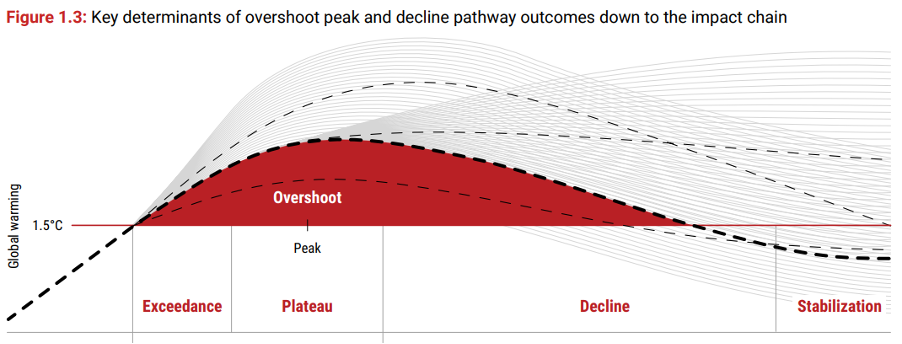
With fossil fuels responsible for 70% of global greenhouse gas emissions, our capacity to limit the magnitude and duration of overshoot depends on our ability to stop producing and burning coal, gas and oil.
We’ve seen an increase in global interest in a phase-out of fossil fuels in the past few years. In 2023, signatories to the Paris Agreement – including Australia – agreed to “transition away from fossil fuels”. In 2025, at COP30 in Brazil, many of them – again including Australia – signed on to the Belém Declaration on the Transition Away from Fossil Fuels that “reaffirmed” their determination to work towards that transition. In Colombia earlier this year, we had the first Conference on Transitioning Away from Fossil Fuels, which Australia attended.
As a signatory to the Paris Agreement, the Australian government is morally and legally bound to contribute its fair share to holding warming to the 1.5°C limit. It’s within this context that Climate Analytics set out to model what a fossil fuel phase-out would look like for Australia, as part of a study we just published.
To investigate Australia’s fossil fuel phase-out roadmap, we put in place what we think is an innovative approach, combining global scenarios and national studies. Our starting point was the Highest Possible Ambition scenario we released at COP30. It aimed at updating high-ambition IPCC scenarios from the early 2020s, which incorporate neither the fact that emissions would rise until now, nor that clean energy costs would plummet. The Highest Possible Ambition sees warming peak at 1.7°C, before declining to 1.2°C by the end of the century. Using these global scenario results as guidance, we further complemented them with national high-ambition sources. The report shows results for two scenarios: the roadmap, called the Fossil Fuel Phase-Out scenario (FFPO), and the Current Policy Projections (CPP) that reflect the government’s current climate framework.
In the fossil fuel phase-out scenario, Australia overachieves on its 2030 and 2035 climate targets by a large margin, and gets to net zero by mid-century, in line with the Paris Agreement.
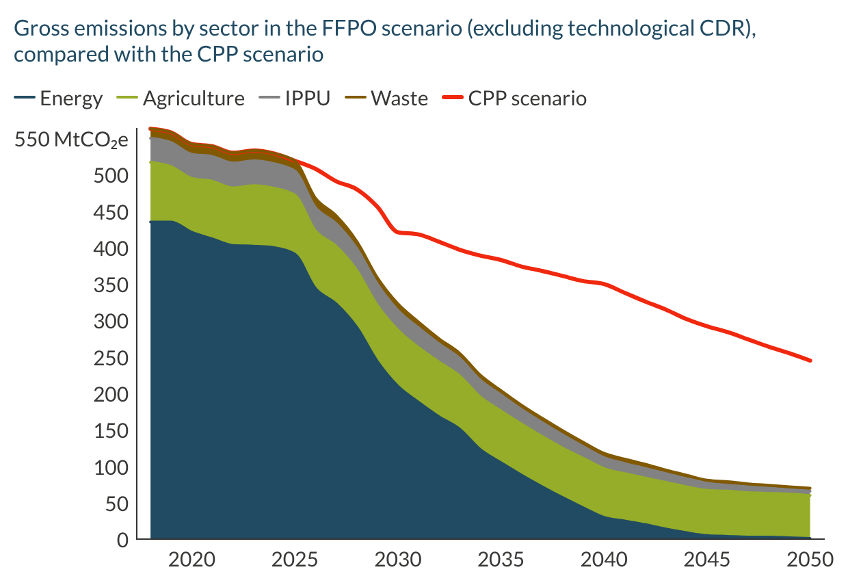
The figure below shows emissions from the different sectors of the economy. Emissions from energy sectors, those from the burning of fossil fuels, like electricity generation or road transport, go to near-zero as early as 2045. By 2050, the only remaining emissions are from agriculture and other sectors where action is more challenging.
Under current policy projections (in red), nearly half of Australia’s 2025 net emissions remain by 2050. Here, we’ll focus on what relates to resource extraction and its energy supply, but our report also covers many other sectors with policy recommendations.
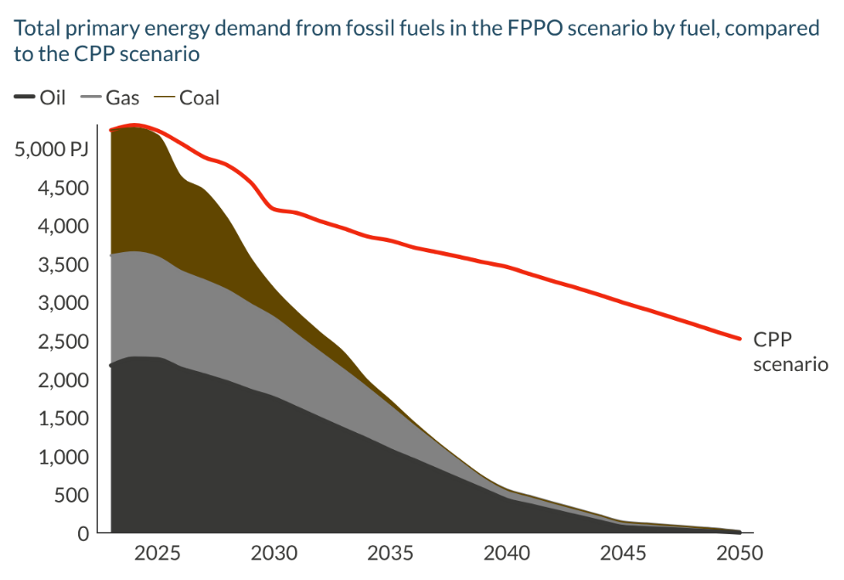
In our FFPO scenario, coal is essentially eliminated in the mid-2030s, gas consumption becomes residual in the 2040s, and oil by 2050″:
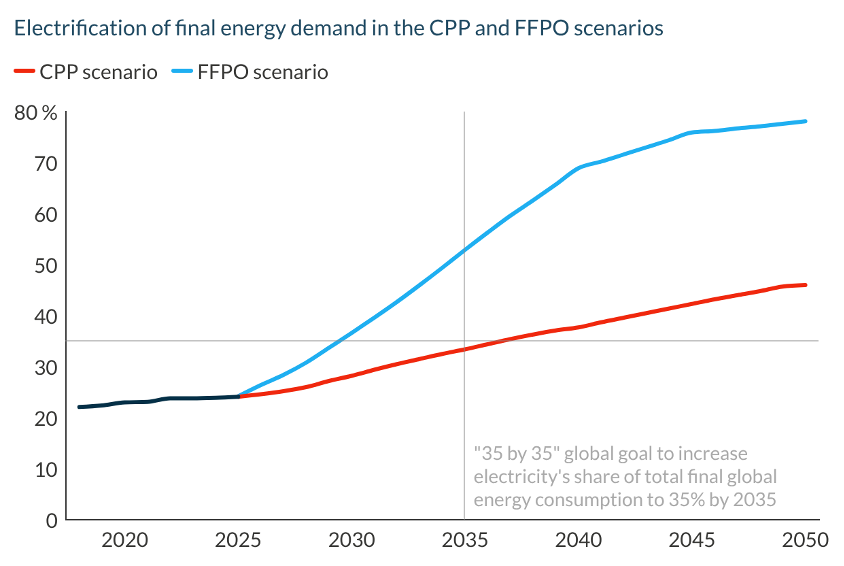
The main instrument for the elimination of carbon-intensive energy sources is electrons. On the one hand, we clean up how we produce electricity thanks to the deployment of solar panels, wind turbines and storage. On the other hand, we clean up the way we consume energy with deep electrification of the economy, for example by replacing petrol cars with electric vehicles, gas stoves with induction stoves, coal and gas-fired industrial processes with electric heat.
Under the FFPO, the electrification of the Australian economy exceeds 75% by 2050, while it barely reaches 50% under current inadequate policies. In the few places where we can’t use electricity, like planes, we switch to cleaner alternatives
The power sector
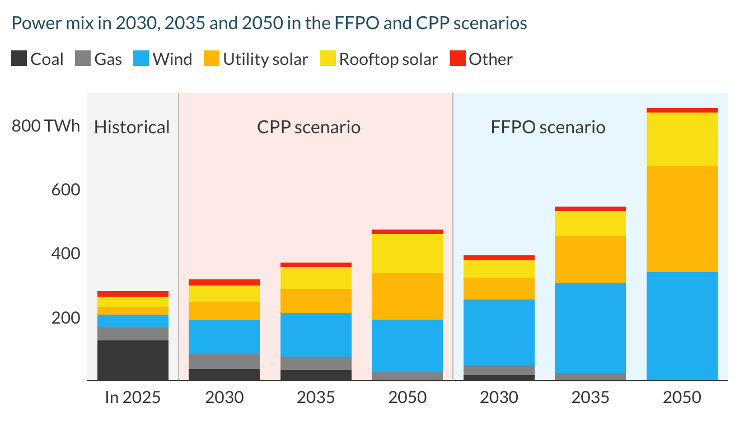
In the fossil fuel phase-out scenario, the switch to clean electricity is the foundation of the economy’s transition. In that scenario, coal is phased out from Australia’s electricity system by 2034, and gas just a few years later.
We found that what is missing from the current policy framework is a binding, clear timeline for the retirement of fossil fuel-fired generators. Half of Australia’s electricity is still generated by coal, but gas is also widely used in Western Australia, either in the South West Interconnected System (SWIS) or off-grid to power remote facilities. This uncertainty is delaying the transition.
The government’s current policies have a very different trajectory. They let coal, gas and oil remain in the system until at least 2050, while the power sector is where the low-hanging decarbonisation fruit hangs, thanks to the plummeting costs of solar and wind.
Our scenario fully harnesses these. We exceed 87% renewable generation nationwide by 2030, and 96% by 2035, trending towards 100% after that, even with a higher power demand than in the current policy projections. These renewable shares apply to all of Australia, unlike the 82% target that only covers the major national grid, leaving diesel or gas-fired power generators in remote mines. To allow for that rollout, we recommend the government cut needlessly long administrative processes and improve state-level cooperation.
Mines and factories in the transition
The decarbonisation of electricity flows into Australia’s industries, where all subsectors electrify and improve their energy efficiency. In some key industries, we also have a limited deployment of hydrogen and other alternative fuels. Under the fossil fuel phase-out pathway, fossil fuel use drops by 70% by 2035, and industry emissions reach zero by 2045.
We paid special attention to mining, first because of its economic weight and climate impact, but also because it uses a quarter of Australia’s diesel – three times more than agriculture. While the FFPO scenario has less iron ore production than current policy projections because of the uptake of secondary steel production, it has higher production of other minerals, to support the transition and produce the lithium for batteries, and the copper for power grids we need to decarbonise.
Still, in our FFPO scenario, the replacement of diesel in vehicles, equipment and infrastructure with the decarbonised electricity we now produce, and, in some cases, hydrogen, makes real zero mining a reality in Australia between 2040 and 2045. This needs to be facilitated by supporting policies to develop common-use infrastructure, like in the Pilbara.
To address mining and the broader industry sector emissions in line with the fossil fuel phase-out scenario, we’re recommending the government do two things.
The first one is fixing its main industrial climate policy, the Safeguard Mechanism (SGM).
The main issue with the Safeguard Mechanism is that, as one of the only emissions trading schemes that allow unlimited use of offsets, it allows facilities to buy their way out of emission reductions with Australian Carbon Credit Units (ACCUs). ACCUs have many problems. One of them is a structural problem with the very notion of offsets: a sequestration project in Australia can produce one ACCU if it sequesters carbon for up to 100 years. Carbon does not obey the Clean Energy Regulator, and can stay in the atmosphere for thousands of years.
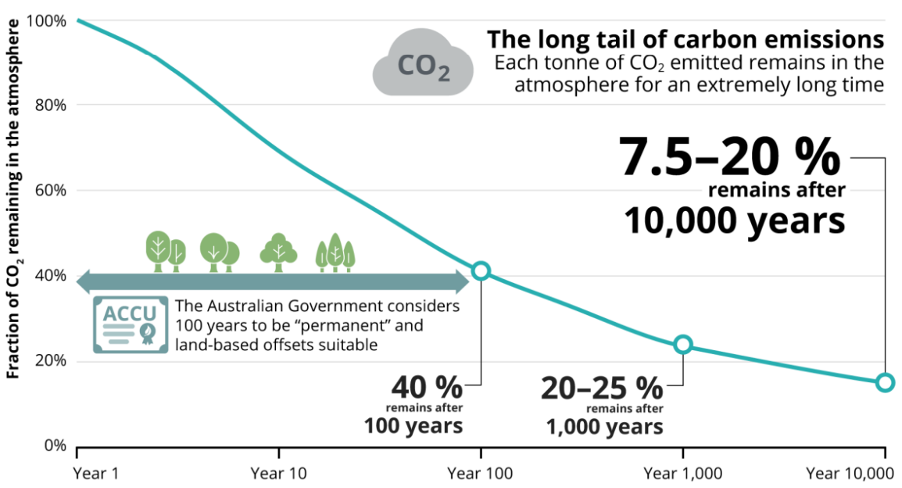
Alongside the structural permanence issue, Australia’s offsetting scheme has what we call an integrity problem: one ACCU awarded to a project sequestering some carbon might not, in the physical world, have done so. Professor Andrew Macintosh recently commented that “this financial year, more than 10 million ACCUs will be issued for reforestation projects in desert and semi-desert areas that have never been cleared of native vegetation. In other words, they are claiming to reforest areas that were never forested or that already had forests when the projects started.”
That has two consequences. First, for climate, if an ACCU does not work “as intended”, and effectively sequesters less than one tonne of CO2, but is used to allow a coal mine to emit one tonne of CO2, you end up with more CO2 in the atmosphere even if it cancels out in your accounting inventories.
The second is that you end up flooding the market with low-quality ACCUs, keeping their price low. The lack of financial incentives then undermines investments in actual emission-reduction technologies. In our recent submission to the 2026-27 SGM review, we recommended the government transition towards a system that actually covers direct emissions, phases out ACCUs and progressively becomes a proper emissions trading scheme.
In a Paris-aligned world, Australia stops exporting coal and gas
The Safeguard is not designed to tackle exported emissions, and nothing in Australia’s policy framework does so. Despite its relatively small contribution to government coffers and jobs, Australia’s fossil fuel industry has a major global carbon impact, with its exports responsible for 3.6% of global emissions in 2022.
Because fossil fuel production and processing facilities represent half of the Safeguard Mechanism but most of their production is exported, an ACCU consumed in Australia by a coal mine, for instance, only covers a subset of the lifecycle emissions of the product.
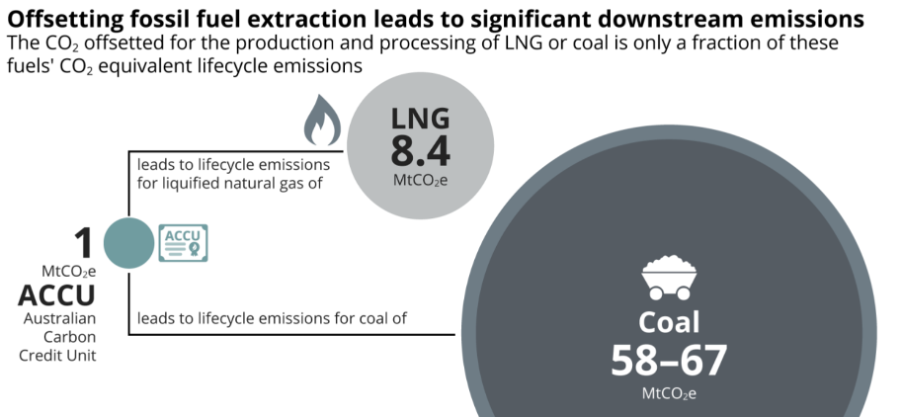
In our scenario, Australia’s coal and gas production and exports decrease dramatically and immediately. In the FFPO scenario, coal production is almost eliminated by 2040, and by 2050 Australia only exports one-tenth of current LNG levels.
By contrast, under current policies, the government sees reductions in coal production and exports, but not so much for LNG: by mid-century, Australia still exports 50 million tonnes of LNG a year, compared to around 80 million currently. A question then is: who will buy all this gas? Countries that currently import Australia’s LNG have their own climate targets. The reduction and elimination of coal and gas exports need to be carefully planned to avoid what the Climate Change Authority calls their “inevitable decline” being forced upon the economy.
A key design question with our FFPO scenario was whether to include a ramp-up of clean exports from Australia. Such transitions carry risks of their own. That’s why, for conservativeness, we have focused on domestic reductions, or “cleaning up the backyard” first. Any additional expansion of new export-oriented clean industries would need to come, in a sustainable manner, on top of an economy that is already powered by renewables.
If our recommendation to strengthen the Safeguard Mechanism is to be the stick, the carrot would be an integrated industrial transition roadmap supporting both existing and new industries, by de-risking investments, providing adequate access to funding, using diplomatic channels to stimulate demand abroad and removing the bottlenecks that stop the transition, while planning for the how and when of the fossil fuel production phase-out.